I haven’t written in a while.
Between travel, being completely drained for days, and pouring time into other projects, I just haven’t had the energy. That’s starting to come back now. And maybe it’s fitting that this lands right here—on Easter weekend.
Because if I’m being honest… my perspective on this season has changed.
I don’t experience Easter the way I used to. And I’ll be upfront about something else—I don’t always practice what I preach. I don’t observe Passover the way Scripture lays it out. Yet at the same time, I know what the Bible says.
And that tension is real.
Like most of us, I was raised in a culture where Christmas and Easter are deeply rooted. They’re familiar. They carry family memories. They feel meaningful.
But they’re not the full picture.
The Resurrection Was Never a Standalone Event
The resurrection of Jesus is not just a moment—it’s part of a pattern.
A timeline.
A structure that was established long before the New Testament was written.
That structure is found in the feasts of Israel.
- Passover – the Lamb is sacrificed
- Unleavened Bread – a life without sin, laid down
- Firstfruits – the first to rise, with more to follow
Jesus didn’t just die and rise again around these feasts.
He fulfilled them—on their exact appointed times.
When you separate the resurrection from the feasts, you don’t lose the truth… but you lose the depth, the precision, and the continuity of what God was doing from the beginning.
The Timeline Problem We Don’t Talk About
There’s another issue that rarely gets questioned:
The traditional Friday crucifixion and Sunday resurrection.
It’s what most of us were taught.
But it doesn’t align cleanly with what Jesus said:
“For as Jonah was three days and three nights in the belly of the great fish, so will the Son of Man be three days and three nights in the heart of the earth.” — Matthew 12:40
Friday to Sunday morning simply doesn’t equal three days and three nights.
Even with partial-day counting, it falls short.
So what are we missing?
The Missing Piece: More Than One Sabbath
The assumption is that there was only one Sabbath that week—the regular Saturday Sabbath.
But during Passover, there are additional Sabbaths, often called High Days.
John makes this clear:
“That Sabbath was a high day.” — John 19:31
This changes the timeline.
A more consistent sequence looks like this:
- Wednesday: Crucifixion (Passover)
- Thursday: High Sabbath (First Day of Unleavened Bread)
- Friday: Preparation day
- Saturday: Weekly Sabbath
- Resurrection: Late Saturday / before Sunday morning
Now the statement “three days and three nights” fits exactly.
And more importantly, everything aligns with the feasts.
The Feasts: The Full Prophetic Timeline
The biblical feasts don’t just commemorate events—they map out the entire redemptive plan.
They fall into two groups:
- Spring Feasts – already fulfilled
- Fall Feasts – still to come
Spring Feasts (Fulfilled)
Passover — The Lamb
Jesus is crucified as the Passover Lamb.
Unleavened Bread — The Sinless Body
Buried without corruption. Sin removed.
Firstfruits — The Resurrection
The first to rise, with many to follow.
Pentecost — The Holy Spirit
The Spirit is given. The Church begins.
Fall Feasts (Yet to Be Fulfilled)
Trumpets — The Call
A sudden trumpet. A gathering. Often connected to the rapture.
“No One Knows the Day or the Hour”
This phrase is often misunderstood.
When Jesus said, “No one knows the day or the hour,” it’s usually taken to mean nothing can be known at all.
But that language was closely tied to the Feast of Trumpets.
Trumpets begins on the new moon:
- It depends on observation
- It can fall on one of two days
- Its exact timing isn’t known in advance
In other words—it was known as a time when no one knew the exact day or hour until it was confirmed.
That matters.
Because Trumpets is associated with:
- A sudden announcement
- The blowing of a trumpet
- The gathering of people
Which closely mirrors descriptions of the Lord’s return.
Day of Atonement — Repentance
A time of national repentance, often connected to Israel turning back to God.
Tabernacles — God With Us
God dwelling among His people. The Kingdom fulfilled.
Be Ready With an Answer
Peter tells us to be ready—to give an answer to anyone who asks about the hope we have.
That’s a serious responsibility.
You can’t give a solid, reliable answer if you’re working from partial or misleading information.
If we repeat the traditional timeline without ever questioning it…
if we celebrate the event without understanding its foundation…
then we’re passing along something less than what Scripture actually teaches.
And that matters.
The feasts aren’t a side note—they’re the framework.
They’re what make the timeline make sense.
They’re what connect the Old Testament to the New.
They’re what turn isolated events into a coherent, unfolding plan.
If we’re going to explain the resurrection, we need to remember the feasts.
So Why Did the Church Move Away From This?
Over time:
- The feasts were labeled “Jewish” instead of foundational
- The Church created its own calendar
- There was a push to separate from Jewish identity
- Cultural traditions were adopted and adapted
And this is where we have to be careful.
Scripture warns us about this very thing:
“Making the word of God of no effect through your tradition…” — Mark 7:13
The result?
Truth remained—but context was lost.
Easter became disconnected from Passover.
And tradition filled the gap.
Where That Leaves Me
I don’t have this perfectly lived out.
But I can see the difference now.
And once you see the pattern—it’s hard to ignore.
Easter still matters.
But it should point back to something bigger.
A Better Way to See It
The resurrection isn’t just a moment.
It’s part of a pattern.
A structure.
A plan that began long before the empty tomb.
And continues forward.
Because the story didn’t start at the resurrection.
And it doesn’t end there either.
Final Word
So today, I will say it with deeper understanding—and just as much joy:
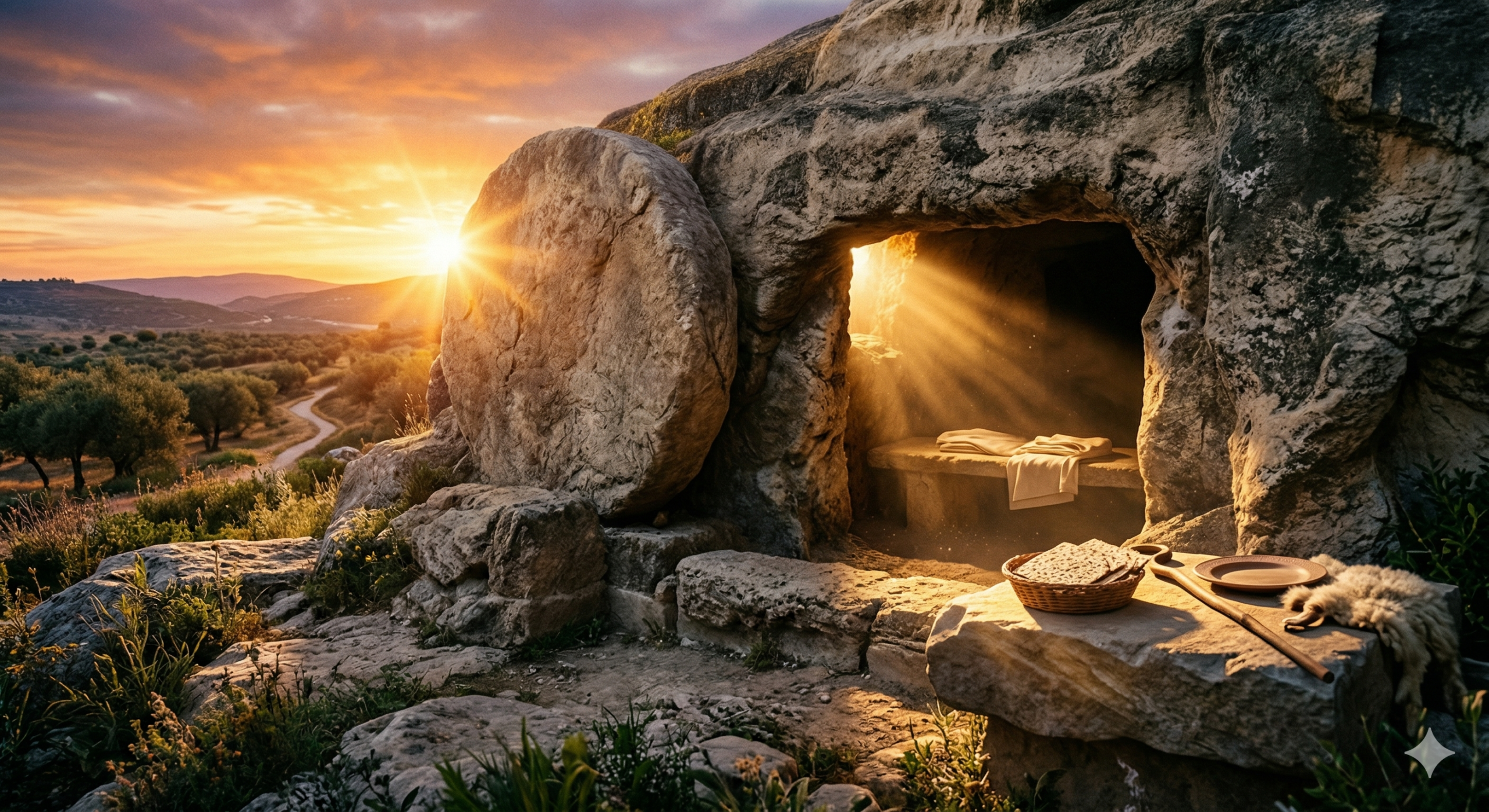
He is risen. Hallelujah!