The “Are We There Yet?” Problem
In an age of 24/7 information noise, humanity is caught in a perpetual loop of “end-times” anxiety. Every regional conflict in the Middle East, every viral outbreak, and every seismic tremor is immediately amplified by social media algorithms, creating a state of emotional exhaustion. We are plagued by the “Are we there yet?” problem—the tendency to interpret every headline through a lens of fear or theological bias.
As a Technical Evangelist, I believe we are witnessing a paradigm shift: the modern “Watchman” must trade his binoculars for a Python script. We have moved from interpreting global events emotionally to building a disciplined, automated system designed to observe them objectively. The goal is to strip away the sensationalism and replace it with a high-fidelity instrument panel that tracks global volatility with clinical precision.
Moving from Speculation to Instrumentation
The core premise of this project is the transition from high-level theological debate to “cold, hard data instrumentation.” By establishing the Global Convergence Index (GCI), we have taken the “apocalyptic” out of the equation and replaced it with measurable “Global Volatility Metrics.”
“You’ve essentially taken the ‘apocalyptic’ out of the equation and replaced it with ‘Global Volatility Metrics.'”
This shift is vital for preserving the credibility of the observer. By relying on the math of the moment rather than the bias of the observer, we create a tool that survives scrutiny. This is not about setting dates; it is about building a mathematically defensible framework that transforms a subjective posture into a disciplined, technical one.
The 500-Year Reality Check
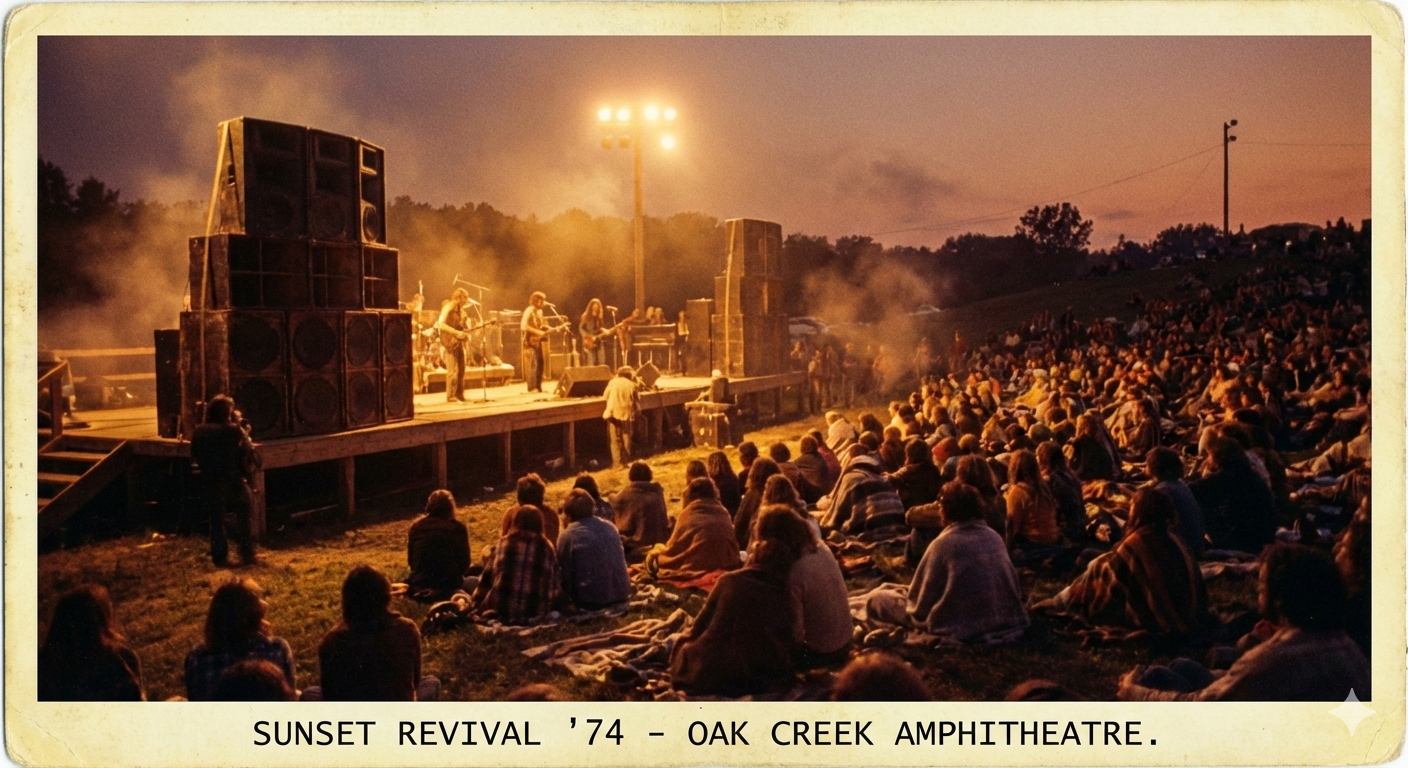
To build a calibrated instrument, we first had to understand the baseline of human history. We conducted a comprehensive historical analysis, scanning data from 1526 to 2026. By mapping decade-to-decade event clusters, the data revealed a striking reality check: while the 2020s feel apocalyptic, they are mathematically overshadowed by the 1900s.
The era of WWI, WWII, and the Spanish Flu remains the most intense convergence spike in the last half-millennium. The reason the 2020s feel more volatile is due to “Recency Bias” fueled by social media acceleration. Our data-driven “Reality Check” allows us to find Narrative Intelligence—using data to counter the emotional noise of the internet. For the GCI, we track four core “Birth Pang” categories:
- War & Geopolitical Conflict: Monitored via news intensity and fatality proxies.
- Food Stress: Tracked through commodity futures and international hunger indices.
- Disease Activity: Sourced from WHO outbreak bulletins and global health reports.
- Seismic Activity: Measured by the frequency of Magnitude 6.0+ events against historical means.
The “PEANUT” Protocol: Technical Grounding
The technical backbone of this project is a Linux Mint server named PEANUT. I named the machine after my daughter, who was “tiny at birth”—a metaphor for a project that started as a small curiosity but has grown into a persistent monitoring station. Building the “crawl” required a technical stack of Python-based logic engines, Flask web servers, and automated cron jobs.
The “hero” of this story is the Z-score. Because we cannot compare disparate units—like body counts for war versus the Richter scale for earthquakes—we use Z-scores to standardize the data on a clinical 0–100 scale. By calculating how many standard deviations (z=(x−μ)/σ) today’s events are from a 10-year rolling mean, we can compare “bullets to quakes” with mathematical parity. For categories like War and Disease where raw data is “noisy,” we scrape News Intensity (keyword volumes for terms like “invasion” or “outbreak”) as a reliable proxy for global stress.
Convergence: The Only Metric that Matters
In the biblical metaphor of “birth pangs,” the critical indicator is not a single event, but the frequency, intensity, and simultaneous overlap of volatility. This is Convergence.
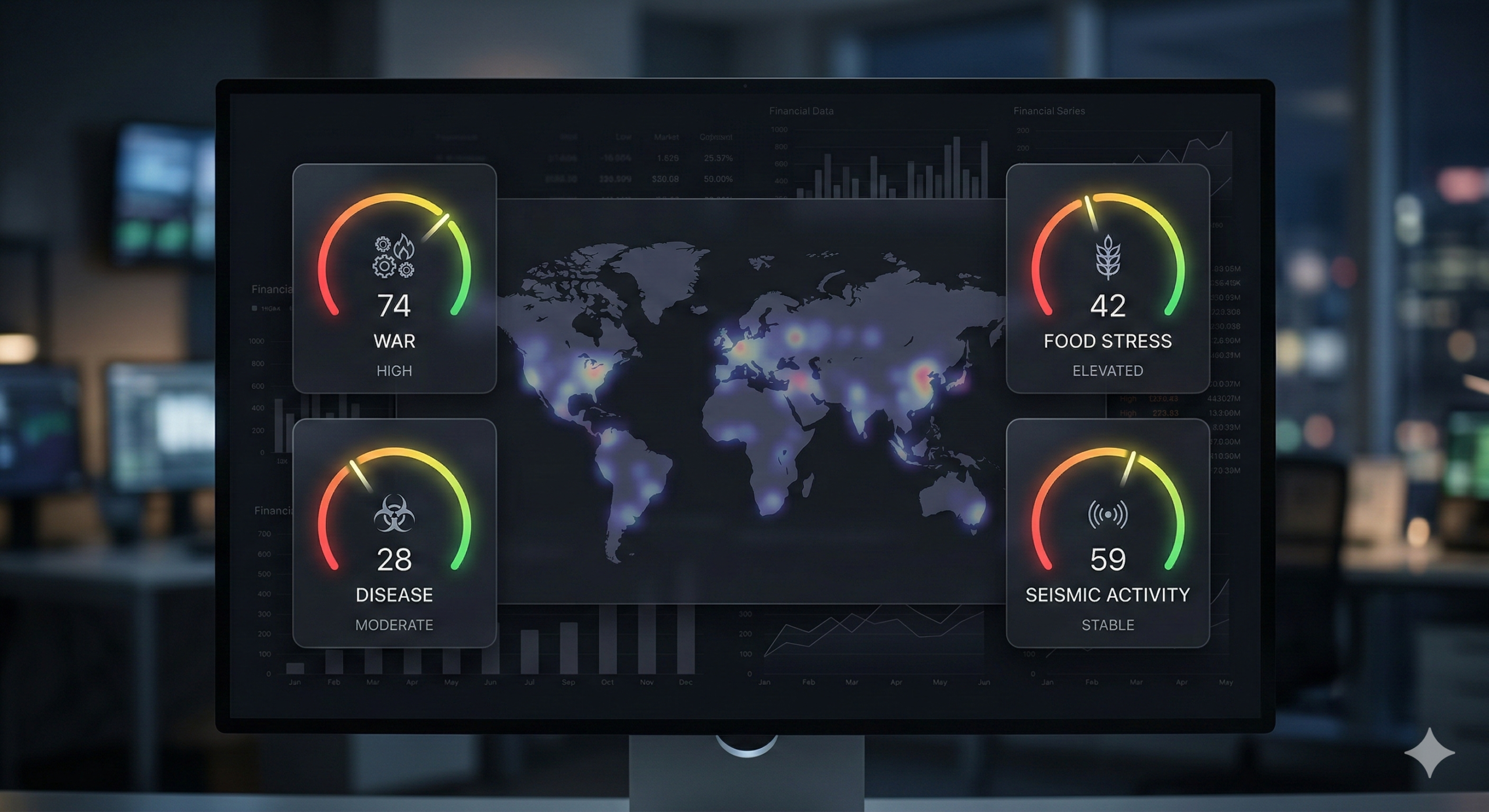
The GCI utilizes a “Convergence Trigger” logic: a category is considered elevated when it exceeds 1.5 standard deviations from the mean. The dashboard features an “Active Convergence State” status line—a transparency check that alerts the user when 3 or more categories are elevated simultaneously.
“Birth pains, if literal, increase in: Frequency, Intensity, Convergence.”
This logic ensures that the needle only moves when there is a systemic shaking of global order, rather than a localized or isolated incident.
The “Bloomberg” Aesthetic of the End-Times
A strategic decision was made to avoid the “fire and brimstone” imagery of traditional prophecy study. Instead, the GCI adopts a “Bloomberg-terminal” aesthetic. The UI uses Glassmorphism and a GitHub Dark color palette to present data with clinical authority.
The dashboard features a Stress Gradient to communicate volatility levels without inciting panic:
- 0–40 (Neutral): Historical baseline norms (Green).
- 41–70 (Elevated): Localized volatility (Yellow).
- 71–90 (High Stress): Regional convergence (Orange).
- 91–100 (Critical): Global convergence (Red).
Each category is marked by “Status Pills” that glow based on the intensity of the data. This clinical visual hierarchy focuses the user on the data’s “Narrative Intelligence” rather than sensational imagery. Looking forward, the system is designed for scalability, with the potential to integrate a 5th gauge for “Local Prophetic Alerts” pulled from specialized portals.
Conclusion: The Disciplined Watchman
The Global Convergence Index represents a move toward finding the signal in the noise. By treating global events as data points for an instrument panel, we move beyond anxiety and toward a disciplined posture of readiness.
Ultimately, prophecy is intended to produce endurance, not panic. It is a tool for the disciplined observer who values objective truth over emotional reaction. We have built the engine; we have set the baseline. In an age of constant information noise, can we afford to watch the world without a calibrated instrument panel?
I’m Wayne – and that’s my world view. What’s yours?