
America finds itself at a crossroads
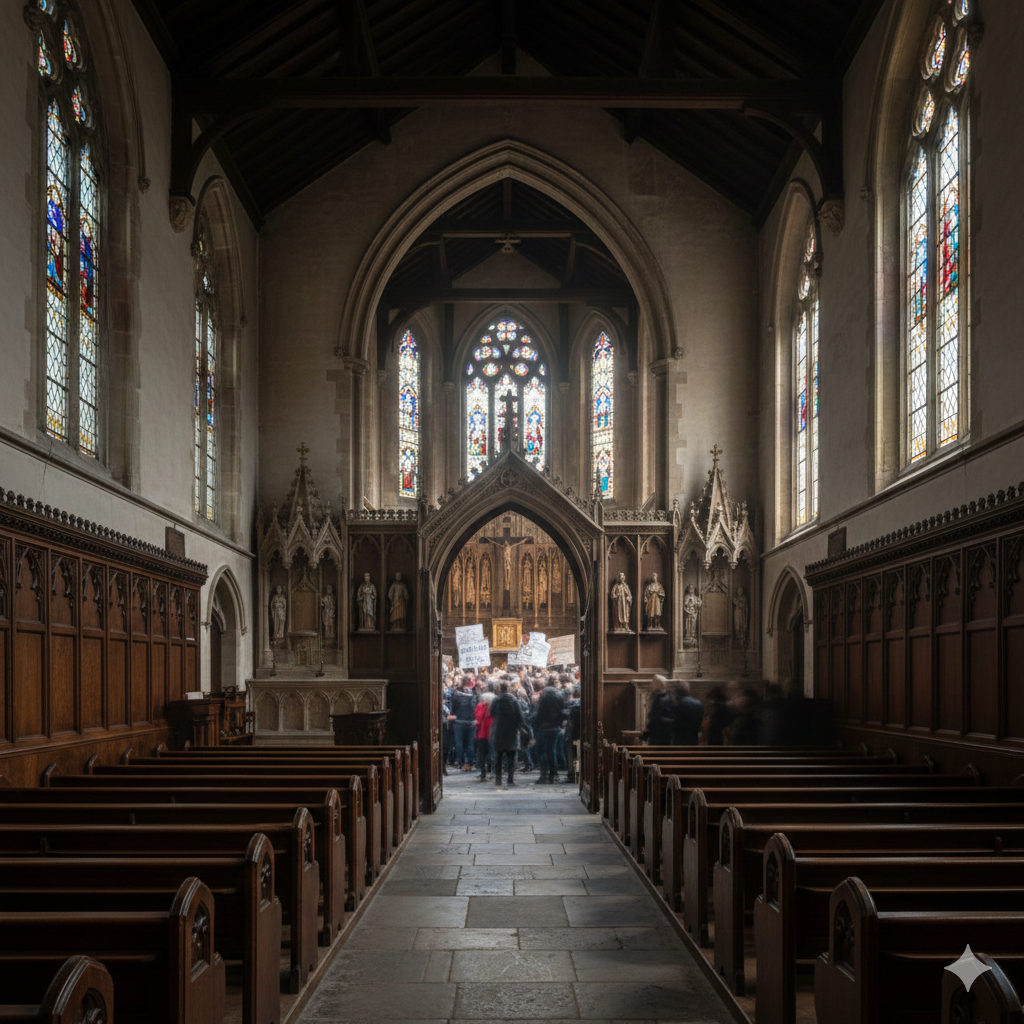
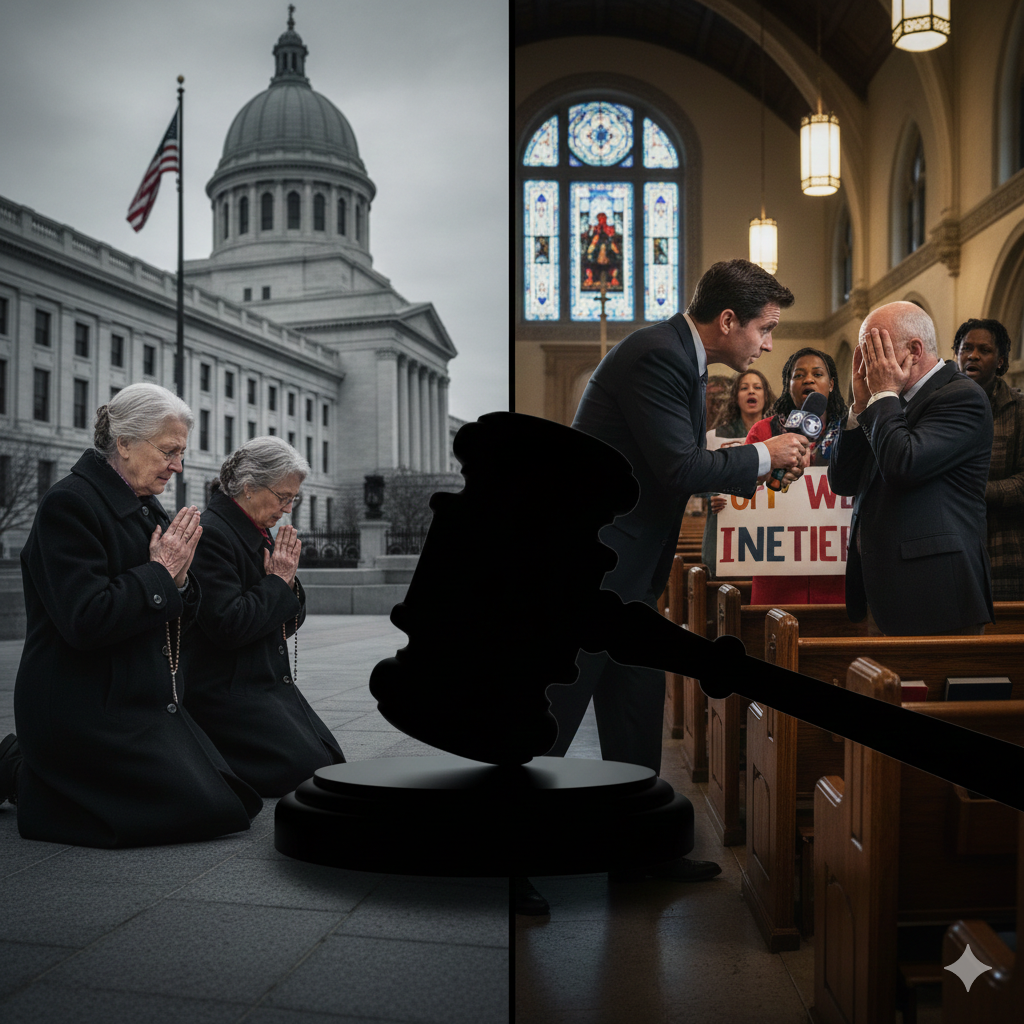
The great drift is precisely what America finds itself navigating today at a profound cultural and political crossroads. The political and cultural fault lines have grown so deep that disagreement is no longer treated as a difference of opinion—it is increasingly viewed as a moral failing. Whether through hyper-partisan politics, the weaponization of culture wars, or the relentless outrage cycle of modern media, we are witnessing a nation struggling with division at nearly every level of society.
Many observers view these developments primarily through the lenses of elections, economics, or shifting political power. Those factors certainly matter. But if we step back and examine our culture through the lens of Scripture, these conflicts appear less like the disease itself and more like symptoms of a much deeper spiritual condition.
The Cultural Mirror and National Healing
When Christians evaluate the condition of a nation, our thoughts often turn to God’s promise in 2 Chronicles 7:14:
“If My people who are called by My name will humble themselves, and pray and seek My face, and turn from their wicked ways, then I will hear from heaven, and will forgive their sin and heal their land.”
For generations, this verse has served as a call to repentance and national renewal. It reminds us that lasting healing does not begin in Washington, but in the hearts of God’s people.
At the same time, many Christians have become concerned by significant cultural changes taking place throughout the United States. Traditional biblical morality is increasingly viewed not simply as outdated, but in some circles as harmful or intolerant. Believers who continue to affirm the authority of Scripture often find themselves at odds with prevailing cultural values. Whether these shifts are viewed as progress or decline largely depends upon one’s worldview, but few would deny that the moral and philosophical foundations of American society are changing.
The Statistical Reality: The Great Emptying
These cultural changes are accompanied by measurable demographic trends.
According to the 2025 Pew Research Center Religious Landscape Study, the percentage of Americans identifying as Christian has declined from 78% in 2007 to 71% in 2014, and now stands at approximately 62%. During that same period, the percentage of Americans claiming no religious affiliation—the so-called “nones”—has risen from 16% to 29%, meaning nearly one in three Americans now identifies as atheist, agnostic, or “nothing in particular.”
Participation has also declined.
Pew reports that only about one-third of American adults now attend religious services at least monthly, while just 37% say they belong to a church, synagogue, mosque, or other house of worship.
These numbers do not prove a theological conclusion by themselves. They simply document a long-term cultural shift that has unfolded over several decades.
Many students of biblical prophecy, however, see these trends as more than sociology. They understand them as being consistent with what the Apostle Paul described as the apostasia—the great “falling away” that would precede the return of Christ. Whether one accepts that interpretation or not, the measurable decline in religious commitment is undeniable.
As generations have drifted from active faith toward cultural indifference, the moral framework that once shaped many American communities has weakened.
The Vacuum Effect: What Fills the Empty Space?
History teaches an enduring lesson: spiritual vacuums rarely remain empty.
When a society abandons one worldview, another inevitably rises to occupy its place.
Throughout much of the West, secular humanism has become one of the dominant replacements. Human reason, individual autonomy, and increasingly the authority of the state become the primary sources of moral authority. Absolute truth gives way to subjective truth, and morality becomes increasingly defined by cultural consensus rather than transcendent standards.
At the same time, significant religious and geopolitical shifts are occurring around the world.
While Christianity has experienced long-term decline throughout much of Europe and North America, Islam continues to grow globally through demographic trends and population growth. The result is a rapidly changing international religious landscape that many students of biblical prophecy believe will play an increasingly important role in future world events. These demographic realities do not determine prophetic fulfillment, but they help explain why many believers are watching global developments with renewed interest.
The Watchman’s Post
When the culture shifts and politics become increasingly turbulent, anxiety is an easy companion.
Yet Scripture calls believers to a different posture.
A watchman is not someone who attempts to predict every headline or sensationalize every crisis. A biblical watchman remains alert, studies the signs of the times, warns faithfully, and trusts God’s sovereignty.
That does not mean withdrawing from society.
Christians are still called to be responsible citizens. We should vote, care for our families, serve our communities, pray for our leaders, and exercise prudent stewardship. Practical preparedness for natural disasters or temporary disruptions is simply wise stewardship, not fear.
The difference lies in our perspective.
Seeing Clearly Without Fear
When Scripture becomes the lens through which we interpret current events, the daily noise begins to lose its power over us.
We no longer expect salvation from Capitol Hill, nor do we surrender to despair when culture moves away from biblical values.
Instead, we recognize that political upheaval, moral confusion, and global realignment fit within a much larger story—one that God revealed long before today’s headlines.
This perspective does not eliminate concern, but it replaces fear with confidence.
Christians are called to remain awake, discerning, and faithful—not because we know tomorrow’s headlines, but because we know the Author of history.
The Only Election That Ultimately Matters
Political cycles come and go.
Parties rise and fall.
Empires appear permanent until history proves otherwise.
But Scripture reminds us that every earthly kingdom is temporary.
The Apostle John records the day when “the kingdom of the world has become the kingdom of our Lord and of His Christ, and He shall reign forever and ever.”
No matter how chaotic global politics become, ultimate authority belongs not to presidents, prime ministers, courts, or congresses.
It belongs to the King of Kings.
That is the watchman’s greatest comfort.
We remain faithful at our posts.
We continue to vote, serve, pray, and proclaim the truth.
But our hope is anchored far beyond the next election.
The King is coming.
His Kingdom cannot be shaken.
And His reign will never end.
I’m Wayne – and that’s my world view. What’s yours?