There was a time-
—not long ago—when crises arrived one at a time.
A war broke out… markets reacted.
A storm hit… recovery followed.
A recession loomed… policymakers adjusted.
That world is gone.
What we’re seeing right now isn’t just instability—it’s overlap. Collision. Convergence. And it’s changing the way we need to think about everything from economics to security to daily life.
1. War Is Now Hitting Your Wallet—Directly
The conflict involving Iran isn’t some distant geopolitical headline anymore. It’s showing up at the gas pump.
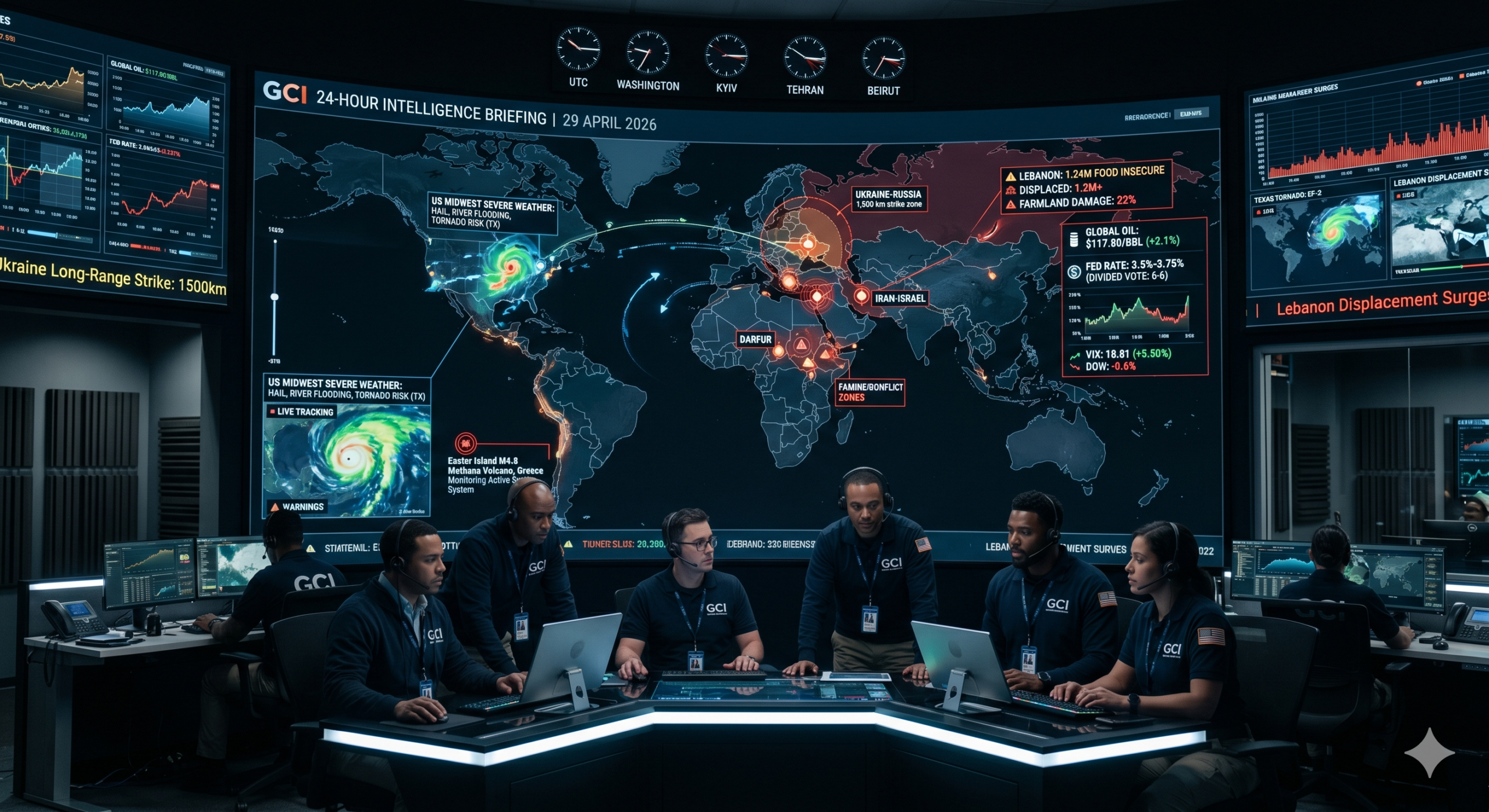
Oil pushing toward $118 a barrel isn’t just a number—it’s a signal. Markets feel it. Households feel it. And institutions like the Federal Reserve are stuck trying to respond to forces they don’t fully control.
A divided Fed vote tells you something important: even the people steering the ship aren’t sure where the waves are coming from next.
2. When a Nation’s Food Supply Disappears
Look at Lebanon.
This isn’t just a war zone—it’s becoming a long-term humanitarian fracture. When over three-quarters of farmers are displaced, you’re not dealing with a temporary crisis. You’re watching a system collapse.
No farmers = no food production
No production = long-term dependency
Dependency = instability that lasts for years
That’s not recovery. That’s erosion.
3. “Dormant” Doesn’t Mean Safe Anymore
The old assumption was simple: if something hasn’t happened in a while, it’s probably not going to.
That assumption is breaking.
Massive hailstorms in the Midwest. Flooding events stacking up. Even long-quiet systems like the Methana volcano in Greece showing signs of life.
The takeaway? Stability is no longer the default setting.
Nature isn’t “acting up.” It’s operating on a wider range than we’re used to—and our systems weren’t built for that.
4. Distance No Longer Protects You
The idea of a “front line” is fading fast.
When Ukraine can strike deep into Russia—over 1,500 km away—it changes the math completely.
Infrastructure once considered safe is now exposed.
Energy systems, supply chains, industrial hubs—all within reach.
Geography used to buy time. Now it barely buys warning.
So What’s Really Changed?
It’s not just that things are happening.
It’s that they’re happening together.
- War drives energy prices
- Energy prices strain economies
- Economic stress limits response capacity
- Environmental shocks hit already weakened systems
And around it goes.
This is what analysts are calling a “convergence” environment—where independent risks no longer stay independent.
Final Thought
We’re not entering a season of chaos.
We’re entering a new baseline.
A world where:
- Crises overlap
- Systems strain simultaneously
- And the margin for error keeps shrinking
The real question isn’t whether more shocks are coming.
It’s whether we’re prepared for a world where they don’t take turns anymore.
I’m Wayne – and that’s our world today.