
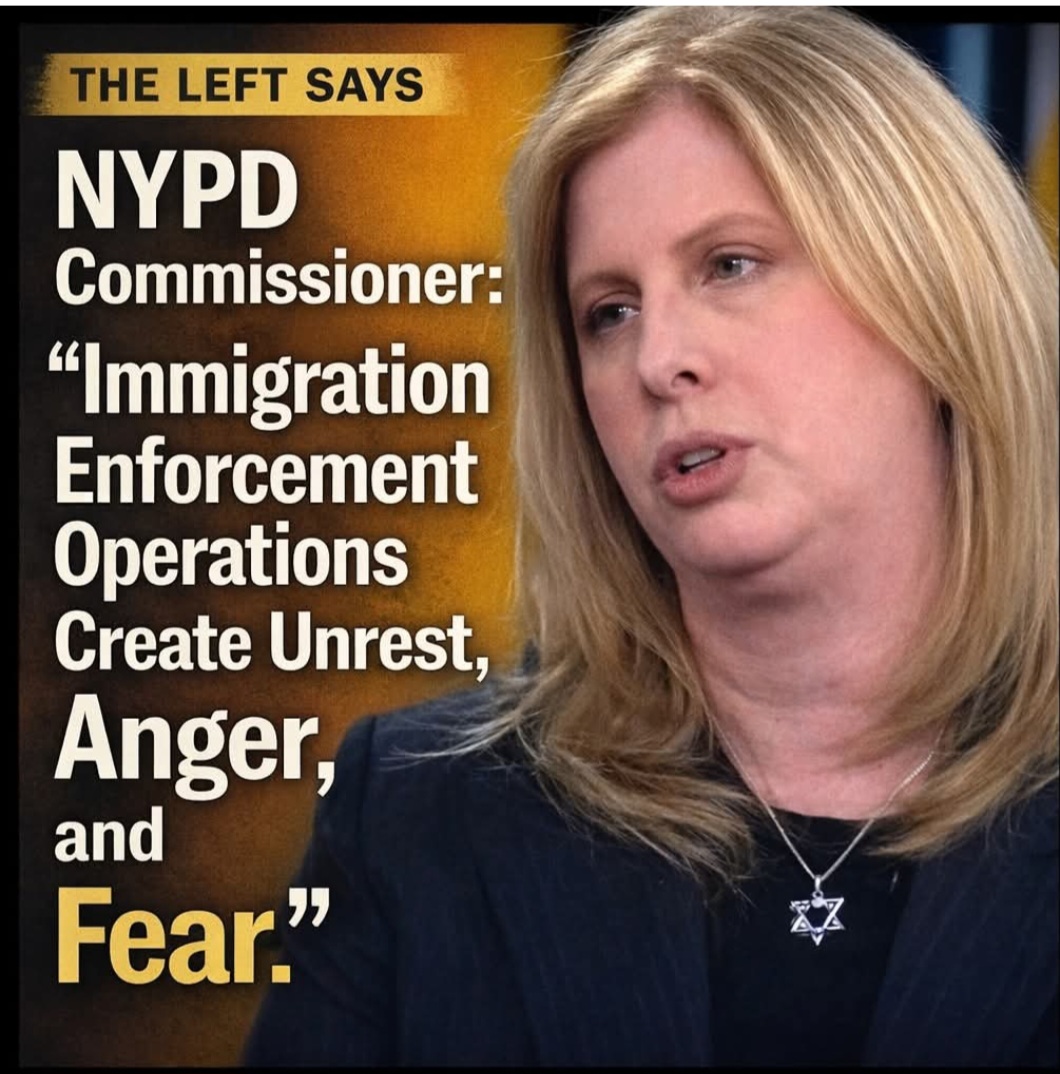
There was a time when public officials understood something basic: the law exists to restrain chaos, not to apologize for it. Yet we now hear leaders suggest that enforcing immigration law “creates unrest, anger, and fear.” That claim isn’t just misguided—it’s an inversion of reality.
Law enforcement does not create unrest. Lawlessness does.
Fear does not come from the presence of order; it comes from its absence. Communities don’t spiral because laws are enforced—they unravel when laws are selectively ignored, inconsistently applied, or publicly undermined by those entrusted to uphold them. When officials blame enforcement itself for social tension, they aren’t diagnosing a problem. They’re confessing a loss of confidence in the very system they lead.
This rhetorical sleight of hand is becoming common. Disorder is treated as an unavoidable condition, while enforcement is portrayed as a provocation. But that framing quietly shifts responsibility away from criminals, traffickers, and repeat offenders—and places it instead on officers, agencies, and citizens who still believe rules matter. That isn’t compassion. It’s abdication.
A serious leader does not tell the public that the law is the cause of fear. A serious leader understands that the purpose of law is to provide moral and civic clarity—clear lines between right and wrong, lawful and unlawful, permitted and prohibited. When those lines blur, anxiety grows. When they vanish, chaos fills the void.
What makes statements like this especially insulting is that they assume the public can’t see the contradiction. We are told that enforcing the law causes instability, while simultaneously being asked to accept rising crime, overwhelmed systems, and eroding trust as the cost of empathy. That is not leadership. That is surrender dressed up as virtue.
There are moments when being polite is less important than being honest. This is one of them.
If a leader truly believes that doing the job they swore to do is harmful to the public, the honorable response isn’t spin or messaging—it’s resignation. You don’t get to condemn the mission while keeping the authority that comes with it. That’s not conscience. That’s convenience.
Righteous indignation has a place. It arises when truth is flipped, when duty is mocked, and when those in power ask the public to accept disorder as the new normal. Calling that out isn’t cruelty. It’s clarity.
Because a society that treats law enforcement as the source of unrest isn’t moving toward justice—it’s admitting it no longer believes in law at all.
I’m Wayne – and that’s my world view. What’s yours?