I wrestled with this longer than I expected.
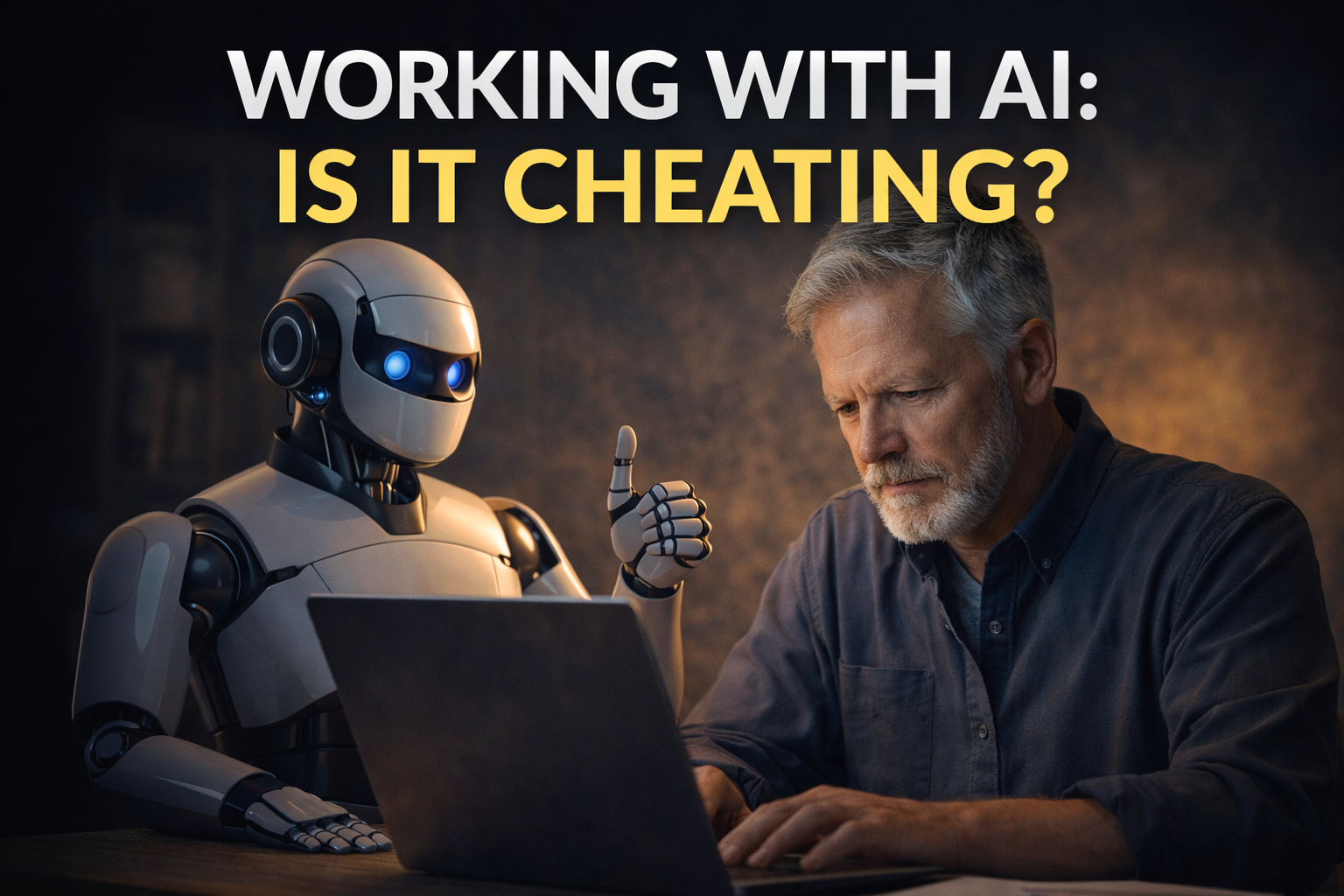
At first, using AI in my writing felt like cheating. I’d read a finished piece and think, That doesn’t sound like Wayne. Worse: Am I just slapping my name on machine-generated words?
That discomfort mattered. If authorship means anything, it’s a moral question, not a technical one.
Here’s what I eventually admitted about myself: I don’t lack ideas. I lack the ability to order them cleanly.
My mind doesn’t think in straight lines—it jumps, branches, anticipates objections, sees five implications at once, and often loses the thread. By the time I sit down to write, the thoughts feel tangled.
The ideas are real. They just aren’t linear.
That’s where AI became useful—not as a source of thought, but as a tool to contain and clarify what’s already there.
My process is straightforward:
- I start a conversation.
- I lay out the subject and the ideas—what matters, what doesn’t, what to emphasize, what to leave out.
- I challenge the framing, correct it, refine it.
- Only then do I let AI shape the prose.
AI doesn’t decide what I think. It helps me say what I already think in a way others can follow.
Once I saw that distinction clearly, the moral tension eased.
Throughout history, serious thinkers rarely worked in isolation. Authors dictated to scribes. Philosophers argued aloud while students recorded and organized. Figures like the Apostle Paul dictated letters to amanuenses; many ancient and medieval works emerged through dictation, editing, and assistance. No one called it cheating—because authorship was never about who physically formed the letters on the page. It was about who owned the ideas, set the direction, and accepted responsibility.
That’s the standard I hold myself to.
The worldview is mine. The boundaries are mine. The conclusions are mine. The accountability is mine.
AI is simply playing the role of a skilled editor or writing assistant: imposing structure on a mind that generates ideas faster than it can arrange them.
In fact, this approach has made me more rigorous, not less. Ideas that survive sustained pushback, questioning, and tightening earn their place. Those that don’t, I’d rather discard before publishing than after.
I’m not outsourcing thought. I’m refusing to let good ideas die because I struggle to untangle them alone.
This site exists because of that decision.
Judge the work as you will—on its coherence, honesty, and substance. But judge it for what it says, not for whether every sentence first appeared in my fingertips.
The ideas are mine. The responsibility is mine. AI just helps me finish the thinking.