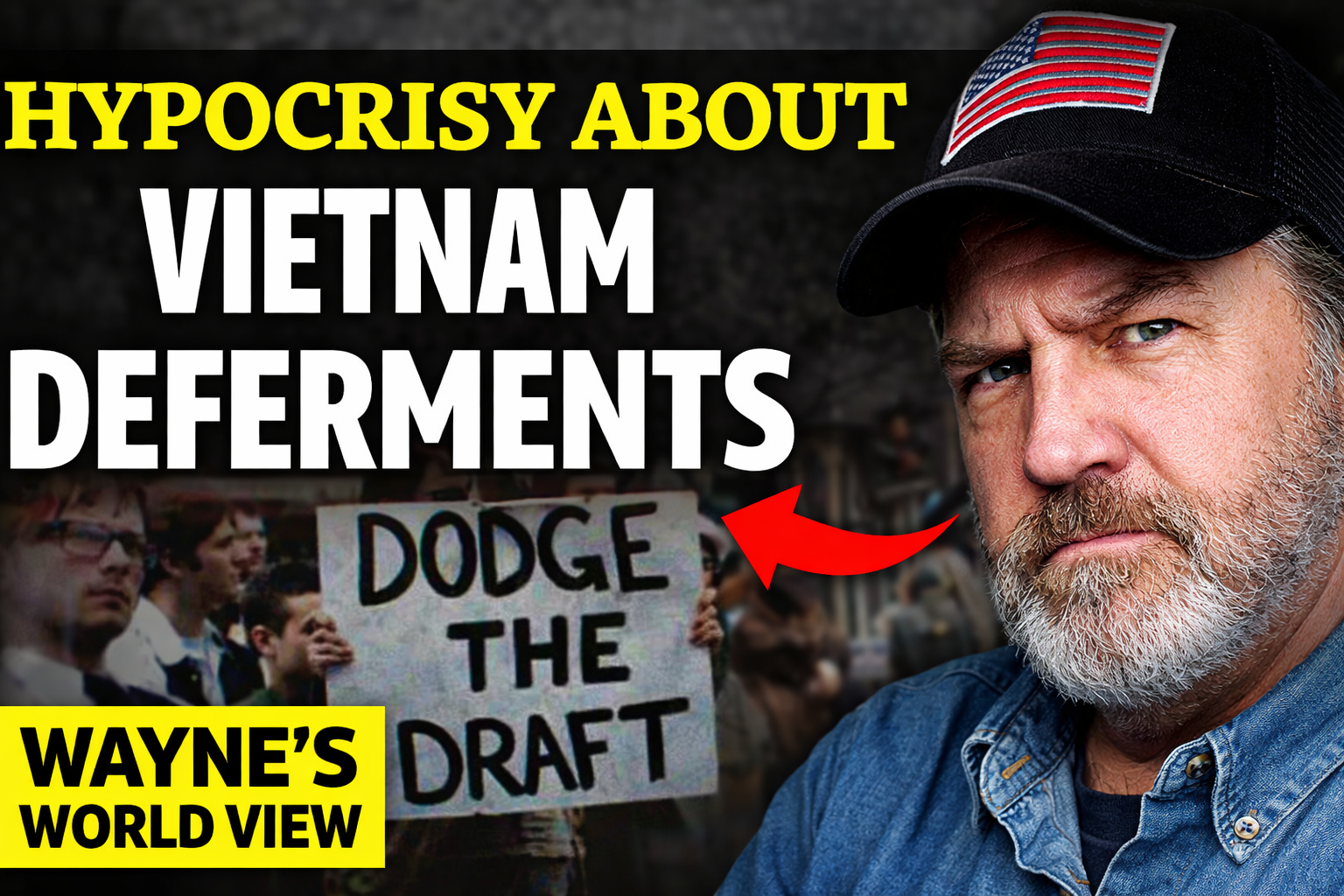
One of the laziest attacks in modern politics is branding someone a coward for using a Vietnam-era draft deferment—especially when the accusers hail from the same “peace and love” generation that once celebrated avoiding the war.
History happened.
Of the roughly 27 million American men eligible for the draft between 1964 and 1973, more than half were deferred, exempted, or disqualified. Only about 2.2 million were actually inducted. Student deferments, medical exemptions, National Guard slots, conscientious objector claims, and even moving abroad were not rare loopholes—they were widespread, government-sanctioned options. Many in the anti-war movement framed dodging the draft as moral resistance or principled opposition, not cowardice. Entire cultural circles applauded it as the ethical choice.
Fast-forward decades, and the narrative flips—but only selectively. What was once normalized or even heroic becomes proof of moral failure, but only when it applies to the “wrong” political figure. This isn’t moral evolution; it’s tribalism.
You can criticize Donald Trump on policy, rhetoric, temperament, or leadership—those are legitimate debates. But labeling him a coward for using a deferment that millions of his contemporaries also used—often proudly—while ignoring similar paths taken by prominent critics from the same era is not principled. It’s selective outrage.
The real revelation isn’t about one man’s character. It’s how quickly people discard consistency when politics turns into identity. Understandable becomes unforgivable. Courageous becomes shameful. Standards shift not because of ethics, but allegiance.
A society that applies different moral yardsticks to allies and adversaries isn’t committed to truth. It’s committed to winning.
History—and courage—don’t belong to one tribe.
I’m Wayne, and that’s my worldview. What’s yours?